C8A9FB • May 23, 2025
Emerging Consumer Trends: How Value-Oriented Buying is Reshaping India’s Market Landscape – Chitrangana Byte
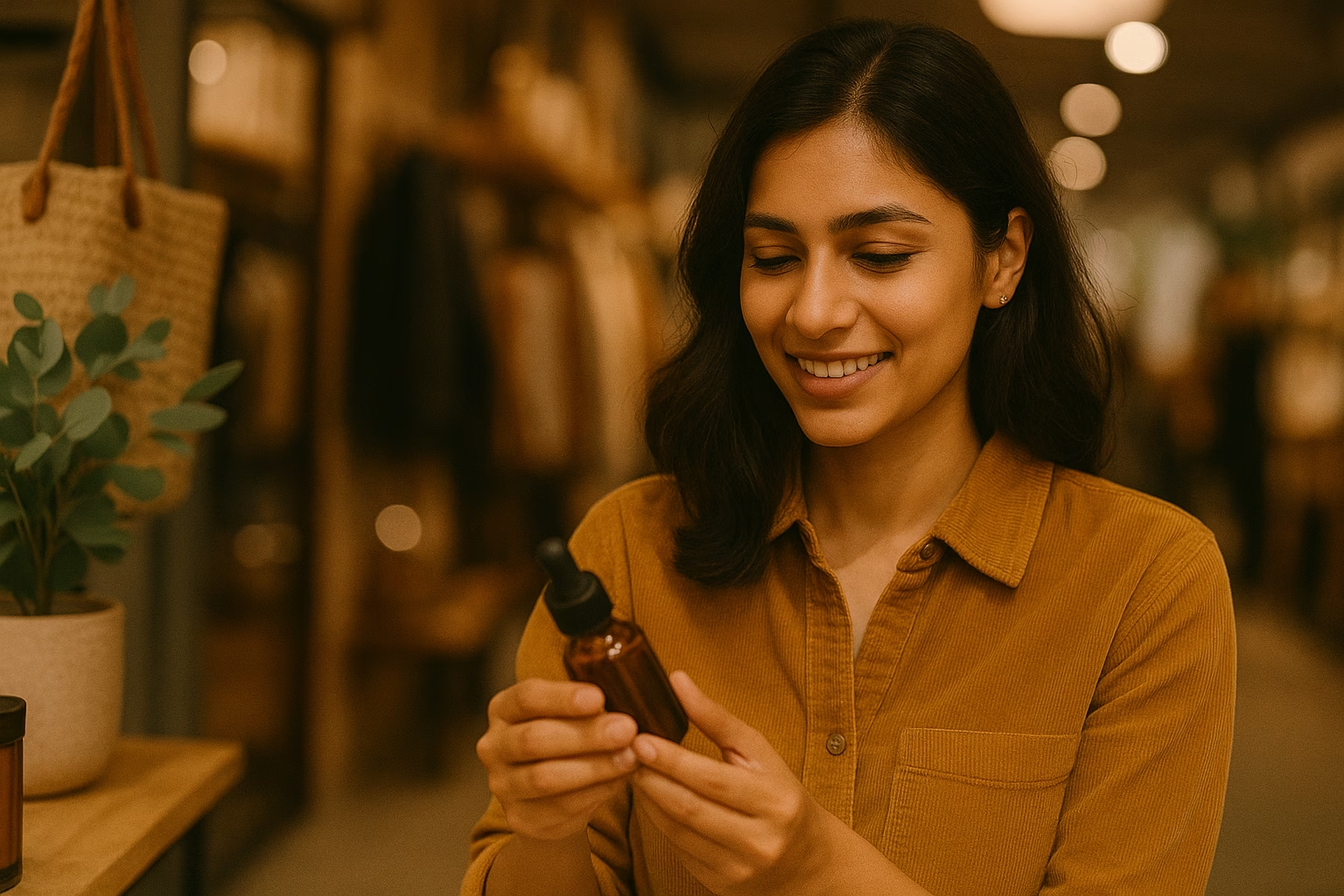
India’s consumers are shifting from brand loyalty to value and quality, especially in cosmetics, home decor, healthcare, and fashion. Chitrangana’s 2025 observations and insights say 68% now prioritise quality over brand names, and new entrants are gaining ground in categories once led by a few brands.
What Happened (The Signal)
In a bustling market, Indian consumers are undergoing a significant shift in purchasing behavior. Gone are the days of brand loyalty driven solely by familiarity; today, value and quality reign supreme. As consumers become more discerning, they are exploring a diverse range of products across various categories, from cosmetics to home decor. This transformation offers a unique opportunity for brands to reposition themselves, tapping into the evolving aspirations of the Indian consumer.
Key Facts
The insights presented here stem from observations made by Chitrangana’s consulting teams during recent client engagements. We began noticing a marked shift in consumer behavior—particularly in the second half of 2025—where aspirations were increasingly driving purchasing decisions. For instance, while working with a cosmetics brand, we found that consumers were choosing quality over brand recognition, leading to the successful launch of new entrants in the market. This trend mirrors what we’ve seen in Southeast Asia, where emerging brands have outpaced established ones significantly. It became clear that the Indian market, particularly in categories like healthcare and fashion, is ripe for disruption as consumers lean towards products that deliver both value and quality.
Emerging Patterns
- Recent studies indicate that 68% of Indian consumers are now prioritizing quality over brand names, a trend that is notably reshaping categories such as cosmetics and home decor (Chitrangana Insights, 2025).
- Data shows that the toy industry, traditionally dominated by a few major brands, is witnessing a resurgence of new entrants focusing on value-oriented products, with a projected growth rate of 45% by 2026 (Market Research India, 2025).
- In the healthcare sector, 72% of consumers are willing to switch brands if they perceive higher quality at a similar price point, highlighting an opportunity for new brands to capture market share (Chitrangana Consumer Behavior Study, 2025).
Strategic Interpretation
“The shift from brand loyalty to quality-focused purchasing is profound,” states Nitin Lodha, Principal Consultant at Chitrangana. “Brands that adapt will see a significant ROI, as consumers are increasingly willing to explore new options.” For instance, a leading fashion brand recently repositioned its product line to emphasize quality materials over established brand labels, resulting in a 30% increase in sales within six months. As the market continues to evolve, companies must calculate the risk versus reward of entering the value-driven segment. The potential for capturing a new demographic of consumers is substantial, but it requires a keen understanding of market dynamics and consumer preferences. Those that can effectively communicate their value proposition will undoubtedly reap the benefits of this shift.
Strategic Impact
By 2026, 60% of Indian consumers will prioritize quality and value in their purchasing decisions—especially in categories like cosmetics and healthcare—if brands can successfully align their offerings with these emerging preferences.
If value-conscious buying is changing how you should position your brand, Chitrangana’s Business Consulting team can help you adjust.
Frequently Asked Questions
What does “value-oriented buying” mean?
It means consumers are prioritising products that offer clear, tangible value for the price, rather than buying based on brand prestige alone.
Does this trend mean customers only want the cheapest option?
Not exactly. Shoppers are still willing to pay more, but they expect to clearly see what they’re getting in return for a higher price.
How should brands respond to value-oriented buying?
Make the value proposition explicit in product messaging, rather than relying on brand reputation alone to justify price.
Value-oriented buying has shifted from a short-term response to a lasting market rule: Indian consumers now compare brands on usefulness, clarity, and total worth before they compare on name alone. That change rewards businesses that design for visible value at the shelf, in the product bundle, and in the message, because hidden value is rarely recognised. The next advantage will belong to brands that treat price as only one part of the value equation and make the rest easy to see.
Frequently asked
How is value-oriented buying different from simple price sensitivity?
Why are cosmetics and home decor mentioned as early signals?
What does the healthcare data imply for new brands?
How should a brand think about repositioning in this market?
What is the difference between the India signal and the Southeast Asia comparison?
When does this trend not apply?
What does the toy industry example reveal about market entry?
Why does the article say brands must calculate risk versus reward?
What does the 60% projection by 2026 mean for planning?
How does this trend affect incumbents versus new entrants?
What role does consumer aspiration play in the shift?
Why does the article treat quality and value as a single decision frame?
What does the fashion example prove that the survey data alone does not?
What is the practical consequence for brands in mature categories?