 # 6919
Ecommerce in the Metaverse: How Immersive Advertising is Transforming Online Shopping in India
Immersive ads help brands boost engagement, enable virtual try-ons, and reach new shoppers with personalised experiences.
not a sales representative.
Immersive advertising, also called metaverse advertising, is becoming more popular, which is changing how ecommerce works. This new type of advertising uses virtual and augmented reality to reach people in a more interesting and personal way and to promote businesses.
The latest Chitrangana.com‘s Report says that in the next seven years, the metaverse will create 13,000 jobs and be worth $900 billion. Six out of ten marketers plan to use the metaverse in their strategies by 2023. They see the potential for better customer experiences and more personalised offers.
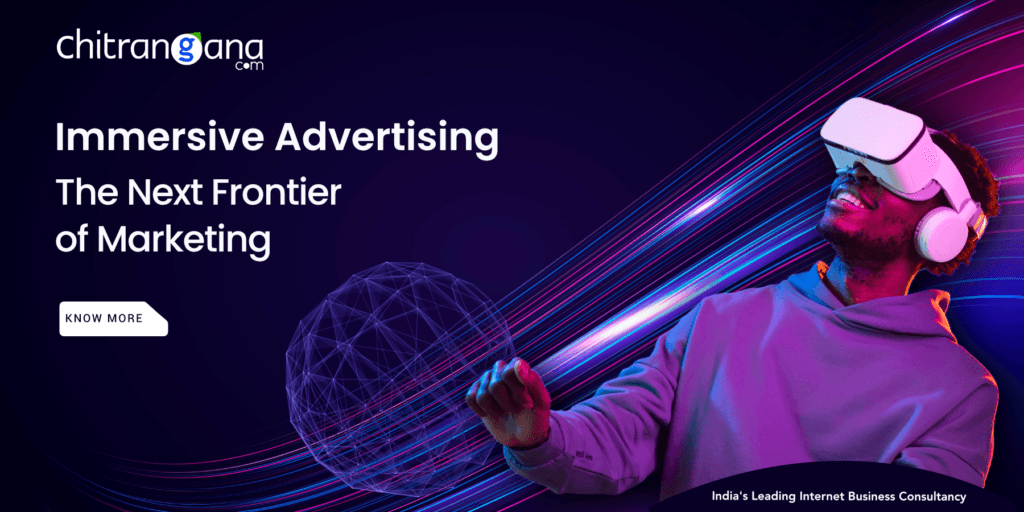
In the world of ecommerce, immersive advertising presents exciting opportunities for businesses to connect with their customers in new and innovative ways. For example, a clothing retailer could use augmented reality to allow customers to virtually try on different outfits and see how they look before making a purchase. A beauty brand could create a virtual makeup try-on experience, allowing customers to experiment with different looks and products.
As the metaverse continues to grow and evolve, ecommerce businesses will need to stay at the forefront of this trend and find ways to incorporate immersive advertising into their strategies. The future of ecommerce is immersive, and companies that embrace this trend will be well positioned to succeed in the digital world.
In addition to improving the customer experience, immersive advertising also offers the potential for greater reach and the ability to cross language barriers. This allows businesses to expand their reach and connect with new audiences in a global market.
- Immersive advertising, also known as metaverse advertising, is a growing trend in the marketing industry.
- This new form of advertising uses virtual and augmented reality experiences to reach audiences and promote businesses.
- The metaverse is expected to become a $800 billion industry and create 10,000 jobs in the next five years.
- Six out of ten marketers plan to incorporate the metaverse into their strategies by 2023.
- Immersive content is believed to be more effective than static content, with 90% of marketing experts and professionals reporting better results from immersive content.
- The benefits of immersive advertising include improved customer experiences, personalized offers, global reach, and the ability to cross language barriers.
- The metaverse presents opportunities for organizations and brands to reach a previously elusive audience.
- Many companies are already experimenting with immersive advertising, including those in the financial, food, telecommunications, consumer goods, clothing, and technology sectors.
- The growth of the metaverse has also created new roles and specialized marketing teams.
- As the industry continues to grow, it is important for businesses to stay at the forefront of this trend and find ways to use immersive advertising to connect with their audiences and grow their businesses.
Immersive advertising is a great way for businesses to connect with their customers in new and interesting ways in the world of ecommerce. For example, a clothing store could use augmented reality to let customers virtually try on different outfits and see how they look before making a purchase. A beauty brand could give customers the chance to try out different looks and products by letting them try them on virtually.
Immersive advertising can make the customer experience better, but it can also reach more people and help people who don’t speak the same language. This lets businesses reach more people in a global market and connect with new ones.’
The metaverse presents a wide range of opportunities for organizations and brands to reach a previously elusive audience. As the world of virtual and augmented reality continues to expand, it opens up new avenues for businesses to connect with their customers and promote their products and services.
According to Soledad Moll, director for Latin America of the Mobile Marketing Association (MMA), the metaverse is a concept that has been in development for some time, but is now expanding to all kinds of organizations and industries. Many companies are already experimenting with immersive advertising, including those in the financial, food, telecommunications, consumer goods, clothing, and technology sectors.
The growth of the metaverse has also created new roles and specialized marketing teams to understand this new world and develop the necessary strategies. As the industry continues to grow, it is important for businesses to stay at the forefront of this trend and find ways to use immersive advertising to connect with their audiences and grow their businesses.
The Current State of Metaverse Commerce in India
While the metaverse hype of 2021–2022 has moderated, immersive commerce technologies are quietly maturing and finding real commercial applications. Augmented reality (AR) try-on features, virtual showrooms, and 3D product visualisation are delivering measurable conversion lifts for early adopters — particularly in fashion, furniture, eyewear, and cosmetics. For Indian eCommerce businesses, these technologies are shifting from experimental to essential.
Practical Immersive Commerce Applications for Indian Brands
- AR Try-On: Allowing customers to virtually try glasses, jewellery, clothing, or makeup before purchasing — reducing return rates by up to 40%
- 3D Product Views: 360-degree product visualisation increases buyer confidence and reduces the uncertainty that leads to cart abandonment
- Virtual Showrooms: For high-value categories like furniture and electronics, virtual showrooms allow customers to visualise products in their own environment
- Gamified Shopping: Interactive product experiences that drive engagement and repeat visits
Exploring immersive commerce for your brand? Speak with Chitrangana about practical immersive commerce strategies that deliver measurable results.
2026 Update: What Actually Happened to Metaverse Commerce
Metaverse shopping did not become the mainstream channel many predicted. Consumer interest cooled, and most brands quietly moved on. What did survive and grow from that same wave of “immersive commerce” thinking is more practical: augmented reality try-on tools, 3D product views on regular product pages, and live-streamed shopping events, all delivered through the apps people already use, not a separate virtual world.
Key takeaway for founders: don’t invest in a standalone metaverse storefront. If you want immersive commerce benefits, add AR try-on or 3D views directly to your existing website or app, where customers already are, and measure the impact on returns and conversion before expanding further.
Frequently Asked Questions
Is metaverse shopping still relevant in 2026?
Not as a standalone channel. The useful parts of the idea, like AR try-on and 3D product views, have been absorbed into regular ecommerce apps and websites instead.
Should a small ecommerce brand invest in AR or 3D product tools?
It’s worth testing for categories like fashion, furniture, or beauty where visualising the product reduces returns, but it should be added to your existing store, not built as a separate metaverse experience.
What replaced metaverse commerce as the “next big thing”?
Live commerce and AI shopping agents have taken over as the more practical innovations driving engagement and sales today.
Wondering where your business sits in the commerce shift?
We map how ready you are today — and design the architecture that keeps you the answer, not the afterthought.
Explore our consulting