V3KD9M • July 23, 2026
The Fastest-Growing Customer of the Next Decade Isn’t Gen Z. It’s the Senior Living Alone (Silver Economy).
The Signal
Across digital commerce and retail strategy, most strategists assume the default customer for the next decade is Gen Z: mobile-first, app-native, comfortable resolving a complaint inside a chat window. Loyalty programmes launch as apps. Customer service moves to bots and DMs. Store layouts and checkout flows center on a shopper who grew up with a phone in hand. That assumption is not wrong so much as incomplete: it designs for one customer while quietly designing out the one who will matter most by 2036. The number of people aged 60 and over has more than doubled since 1995, from 541 million to 1.2 billion in 2025. The United Nations projects it will reach 2.1 billion by 2050. In the United States alone, adults aged 50 and over generated an estimated $12.5 trillion in economic activity in 2024, according to AARP’s Longevity Economy Outlook 2026. AARP projects that figure will grow into a $24 trillion economy by 2060. The fastest-growing, highest-spending customer of the next decade is not digital-native. This customer is ageing and often affluent. And in places that once guaranteed family support, this customer is, for the first time, increasingly alone.
What We Know
The shift is demographic, financial, and structural at once, and none of the three trends are slowing down.
- By 2030, one in six people worldwide will be aged 60 or over, the World Health Organization reported in October 2025.
- Americans aged 50 and older generated an estimated $12.5 trillion in economic activity in 2024. AARP’s Longevity Economy Outlook 2026 projects them to drive a $24 trillion economy by 2060.
- India’s population aged 80 and over will grow by roughly 279% between 2022 and 2050, the United Nations Population Fund found. A rising share of them are widowed and highly dependent.
- India’s joint family structure, long assumed to guarantee elder care, is breaking down faster, with nuclear and single-child households accelerating, the Observer Research Foundation reported in March 2026.
- Consumers over 30 show a 40% brand-loyalty preference gap toward familiar brands, compared with 25% for Gen Z, according to Hall & Partners. Older customers are harder to win, but far more valuable once won.
These figures describe different populations — global (UN, WHO), the United States (AARP), and India (UNFPA, ORF) — rather than a single trend line, but they point the same way. Five different sources, one shape: the customer receiving the least digital-first design attention holds the most money, the fastest-growing numbers, and the least family support to fall back on.
The Pattern — Designed Out, Not Designed For
- Family used to be the customer service department, and it is retiring. Extended households once absorbed what businesses never had to build. Someone was there to read the fine print, drive to the store, or sit on hold with the call centre. Businesses assumed that safety net was strongest in India and weaker in the UK, US, and Japan. It is now thinning everywhere. A senior shopping alone in Mumbai in 2036 will face nearly the same absence of household backup that a senior in Manchester faces today.
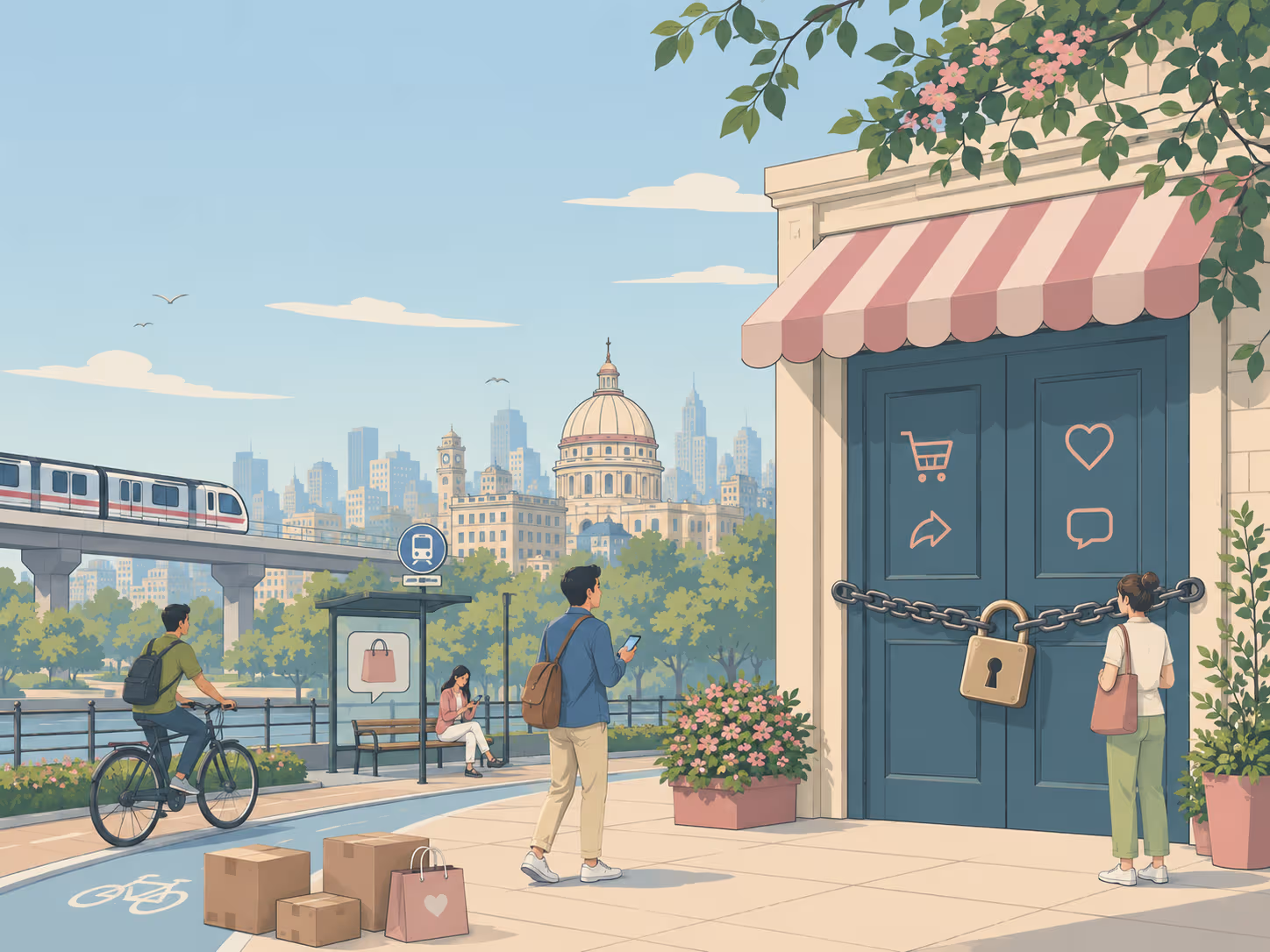
- Designing “for Gen Z” and designing “against the senior” have quietly become the same decision. App-only loyalty, QR-only menus, chatbot-first support, and biometric-only checkout are not neutral choices. Each one filters out the shopper with lower digital confidence, weaker eyesight, or no one at home to ask for help. That same shopper often sits on the largest share of disposable income in the room.
- The senior segment is not one segment. Most loyalty and CRM systems today serve a 65-year-old managing their own investments and a 90-year-old living alone without a smartphone through the same “senior” checkbox. The businesses that win this decade will build tiered experience, not a single accessibility toggle. The range inside “60 and over” is now wider than the range between a teenager and a 40-year-old.
Our Read
The next decade’s most valuable customer is not the one businesses are building for, Chitrangana says — it is the senior spending more, living longer, and, for the first time, doing it alone.
Chitrangana’s view did not start as a demographic argument. It started inside the same operating assessments where we were asked to fix loyalty, layout, and reviews for legacy retailers. Again and again, the most loyal, most valuable customer in the data was also the least served by the newest tools the business had built. Every chatbot, every app-only reward, every QR-code menu was a small tax. It fell on exactly the shopper least able to pay it in time and confidence, and most able to pay it in money. Chitrangana does not argue against building for Gen Z. We argue against building only for Gen Z. The fastest-growing, highest-spending, and increasingly unaccompanied customer of the next decade is being left to manage a self-checkout screen alone. A business architected for one generation is not future-proof. It is simply early for one future and late for another that has already arrived.
Principal Consultant Aaditya Kumar says the senior citizen now represents the more disposable-spending economy. The super-senior citizen requires business operations built on an assistive approach. The goal is to keep them comfortable, not to put extreme, tech-forward presentation in front of them. This is a traditional-comfort economy with the technology kept behind the scenes.
What This Changes
The question for any consumer business is no longer how to win Gen Z’s attention. Gen Z’s habits are already well understood and well served. The harder, more valuable question is a different one. Who is designing for the customer who is seventy-eight, has more money than most twenty-eight-year-olds, and increasingly has no one at home to call before they buy, complain, or leave?
This changes what accessible design has to mean. It is not a compliance checkbox, but a core segment with its own loyalty logic, its own service escalation path, and its own reason to trust a brand for the next twenty years. The businesses that treat the ageing, solo customer as a design priority now will own a customer relationship most competitors are still ignoring. By the time everyone else notices, that customer will have already chosen who to trust with the rest of their life.
Frequently Asked Questions
Why is the senior customer the fastest-growing customer of the next decade?
The number of people aged 60 and over has more than doubled since 1995, rising from 541 million to 1.2 billion in 2025. The United Nations projects it will reach 2.1 billion by 2050. By 2030, one in six people worldwide will be aged 60 or over, according to the World Health Organization.
How much are older consumers actually spending?
Americans aged 50 and older generated an estimated $12.5 trillion in economic activity in 2024. AARP’s Longevity Economy Outlook 2026 projects this will grow into a $24 trillion economy by 2060. Older consumers also show stronger brand loyalty, with a 40% loyalty preference toward familiar brands compared with 25% for Gen Z.
Why are more seniors living without family support?
Traditional structures once assumed to guarantee elder care are breaking down. In India, the joint family structure is thinning as nuclear and single-child households accelerate. The population aged 80 and over will grow by roughly 279% between 2022 and 2050, with a rising share who are widowed and highly dependent.
What does designing for the solo senior customer mean in practice?
It means treating accessibility as a core segment rather than a compliance checkbox. Principal Consultant Aaditya Kumar describes it as an assistive approach that keeps the customer comfortable. It delivers traditional comfort with technology kept behind the scenes, rather than an extreme tech-forward presentation. Businesses should build tiered experiences, dedicated loyalty logic, and clear service escalation paths.
Should businesses stop designing for Gen Z?
No. The argument is not against building for Gen Z, but against building only for Gen Z. A business architected for a single generation is not future-proof; the goal is to serve both the digital-native shopper and the fast-growing, high-spending, increasingly solo senior customer.