 # 7020
AI in eCommerce Marketing: How Indian Startups Can Succeed with Artificial Intelligence
AI helps Indian startups automate campaign analysis, personalize offers, and target high-intent shoppers for stronger ROI.
not a sales representative.
In Short
AI in eCommerce marketing gives Indian startups a practical way to automate routine work, personalise customer journeys, improve targeting, and raise campaign efficiency. It does this by analysing large data sets quickly and turning browsing history, purchase patterns, demographics, search activity, and regional preferences into actions marketers can use. The article states that AI can collect and analyse data, identify trends, suggest campaign changes, and produce product recommendations based on customer behaviour. It can also optimise website navigation, power chatbots and virtual assistants, forecast demand, and automate paid ad bidding.
Artificial intelligence (AI) is becoming an increasingly crucial instrument in the field of eCommerce marketing. AI is assisting organisations in creating more effective marketing efforts and driving better outcomes via its capacity to swiftly analyse massive volumes of data and deliver insights into consumer behaviour.
One of the primary advantages of adopting AI in eCommerce marketing is its potential to automate numerous processes that are now done manually. AI-powered marketing automation systems, for example, may assist with data collection and analysis, identifying trends and patterns, and making suggestions on how to improve campaigns based on this knowledge. Marketers may save a tremendous amount of time and effort by focusing on more creative and strategic jobs.
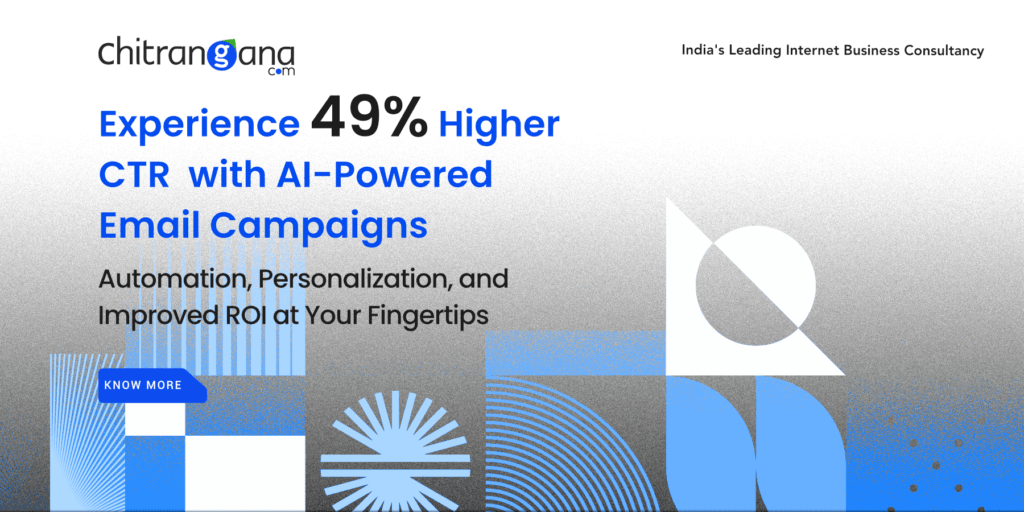
AI may also be used to tailor marketing messages and campaigns to specific consumer preferences and behaviours. AI algorithms may give insights into what each consumer is most likely to react to by evaluating data from many sources, allowing firms to produce more relevant and successful marketing messages.
AI may help firms increase their targeting and reach, in addition to saving time and customisation. AI algorithms may assist organisations in identifying the most successful channels and techniques for reaching their target audience by evaluating data on consumer demographics, interests, and search activity. This may assist to increase the efficiency and efficacy of marketing initiatives, resulting in better outcomes and greater ROI.
Overall, the application of AI in eCommerce marketing provides organisations with a variety of advantages, ranging from increased efficiency and personalisation to greater targeting and reach. As AI technology advances, it is going to become a more vital tool for eCommerce marketers seeking to deliver better outcomes and remain ahead of the competition.
In addition to the advantages described above, AI may be utilised to assist eCommerce marketing efforts in a variety of ways. AI, for example, may be used to:
- Optimize website design and navigation: AI algorithms may assist organisations in identifying portions of their website that may be confusing or difficult to traverse by evaluating data on consumer behaviour and preferences. This may enhance the user experience and increase the chance of a consumer making a purchase.
- Improve customer service: AI-powered chatbots and virtual assistants may respond to client concerns and enquiries in a customised and timely manner, therefore improving the entire customer experience and building loyalty.
- AI algorithms may help firms foresee possible future opportunities and problems by studying data on consumer behaviour and industry trends. This may assist organisations in making better judgments and staying ahead of the competition.
- AI systems may examine data on client preferences and prior purchases to generate customised product suggestions. This may assist to boost consumer engagement and generate more purchases.
According to a Chitrangana’s study, 43% of business leaders think that marketing AI will be very important to the future success of their companies. The study also found that businesses have the hardest time using AI because they don’t have a plan for how to use it. These numbers show how important AI is in marketing and how important it is for businesses to carefully plan and implement their AI strategies to get the most out of them.
How Indian eCommerce Startups Can Leverage AI in Marketing
For Indian eCommerce startups, the AI marketing opportunity is enormous but requires a structured approach. India’s digital commerce market is projected to reach $350 billion by 2030, and AI-driven marketing is increasingly separating winners from laggards. Here are the most actionable strategies for Indian startups:
1. Start with AI-Powered Personalisation
Indian consumers respond strongly to personalised experiences. AI engines can analyse browsing history, purchase patterns, and even regional language preferences to deliver hyper-relevant product recommendations. Tools like CleverTap, MoEngage, and Netcore Cloud are built specifically for the Indian market and offer affordable AI personalisation for growing startups.
2. Deploy Conversational AI for Customer Engagement
With WhatsApp deeply embedded in India’s daily commerce, AI-powered chatbots integrated into WhatsApp Business API can dramatically improve conversion rates. Startups like Haptik and Yellow.ai have demonstrated that AI chat can resolve 70–80% of customer queries without human intervention, freeing teams to focus on complex, high-value interactions.
3. Use Predictive Analytics for Inventory and Demand Forecasting
AI-driven demand forecasting helps startups avoid the twin traps of overstocking and stockouts. By analysing historical sales, seasonal trends, regional festivals, and real-time signals, AI models can predict demand with 85–90% accuracy — a game-changer for cash-constrained startups managing thin margins.
4. Automate Paid Advertising with AI Bidding
Google Performance Max and Meta Advantage+ campaigns use AI to optimise ad delivery automatically. For Indian startups with limited marketing budgets, these AI bidding systems can reduce cost-per-acquisition by 20–40% compared to manual campaign management — making every rupee work harder.
Key Statistics: AI in eCommerce Marketing India 2024–2025
- India’s AI in retail and eCommerce market is growing at 35% CAGR (2023–2028)
- Brands using AI personalisation see 15–25% higher average order value
- AI-powered email campaigns achieve 6x higher transaction rates than standard campaigns
- 70% of Indian online shoppers say personalised recommendations influence their purchase decisions
- eCommerce companies using AI for search see 30% uplift in product discoverability
Challenges and Considerations
While the benefits are clear, Indian startups must navigate several challenges when adopting AI in eCommerce marketing. Data privacy under the Digital Personal Data Protection (DPDP) Act 2023 requires transparent user consent mechanisms. Additionally, AI models trained predominantly on Western consumer behaviour may not accurately reflect India’s diverse linguistic and cultural contexts — making localisation of AI models a critical investment.
Frequently Asked Questions
What is AI in eCommerce marketing?
AI in eCommerce marketing refers to the use of machine learning, natural language processing, and predictive analytics to automate, personalise, and optimise marketing activities — from product recommendations and dynamic pricing to customer segmentation and ad targeting.
How can a small Indian eCommerce startup afford AI marketing tools?
Many AI marketing platforms offer SaaS pricing starting from ₹5,000–₹15,000 per month, making them accessible to early-stage startups. Additionally, Google and Meta’s built-in AI ad tools are free to use — you only pay for the ad spend itself. Starting with AI chatbots on WhatsApp Business is a cost-effective first step with high ROI.
Does AI replace human marketers in eCommerce?
No — AI augments rather than replaces human marketers. AI handles repetitive, data-intensive tasks like A/B testing, audience segmentation, and bid optimisation, freeing human marketers to focus on brand strategy, creative thinking, and customer relationships. The most effective teams combine AI efficiency with human creativity.
Need expert guidance on implementing AI in your eCommerce marketing strategy? Connect with Chitrangana for a strategic consultation tailored to Indian market conditions.
Looking for expert eCommerce consulting services in India? Chitrangana provides architecture-led digital commerce consulting for D2C, B2B, and marketplace businesses since 2007.
2026 Update: From Predictive AI to Agentic AI Marketing
The AI marketing techniques above are now standard practice for most serious ecommerce brands in India. The bigger shift since then is the rise of agentic AI: shopping assistants that can browse, compare, and even complete purchases on a customer’s behalf. This means marketing is no longer aimed only at human eyes, product data, reviews, and pricing now need to be structured clearly enough for AI agents to understand and recommend your brand too.
Key takeaway for founders: keep investing in AI-personalised campaigns for people, but also make sure your product information, FAQs, and reviews are clean, structured, and accurate, so that AI shopping agents can represent your brand correctly when customers use them to shop.
Frequently asked
How does AI in eCommerce marketing differ from manual campaign management?
Which AI use case gives the fastest return for an Indian startup?
When does AI in eCommerce marketing not fit well?
How do AI chatbots on WhatsApp Business change customer engagement?
What is the main cost issue for small startups adopting AI tools?
How does predictive analytics reduce inventory risk?
What is the difference between AI personalisation and AI targeting?
How should a startup handle data privacy before using AI?
Why does the article say AI bidding matters more for budget-constrained startups?
Does AI replace human marketers in eCommerce?
Why is localisation of AI models a structural requirement in India?
What evidence in the article suggests AI affects purchase decisions?
How should a startup sequence AI adoption if it wants structure before scale?
Wondering where your business sits in the commerce shift?
We map how ready you are today — and design the architecture that keeps you the answer, not the afterthought.
Explore our consulting